Instrument Flight Rating (IFR)
Total Program Length:
8–12 weeks (flexible scheduling available)
Total Flight Hours:
Minimum 40 hours (FAA/EASA standard)
The Instrument Flight Rating allows pilots to fly safely and confidently using instruments alone. This program is essential for operating in low visibility, adverse weather, and controlled airspace environments.
Program Structure
A. Ground School (Instrument Theory)
Aviation Theory
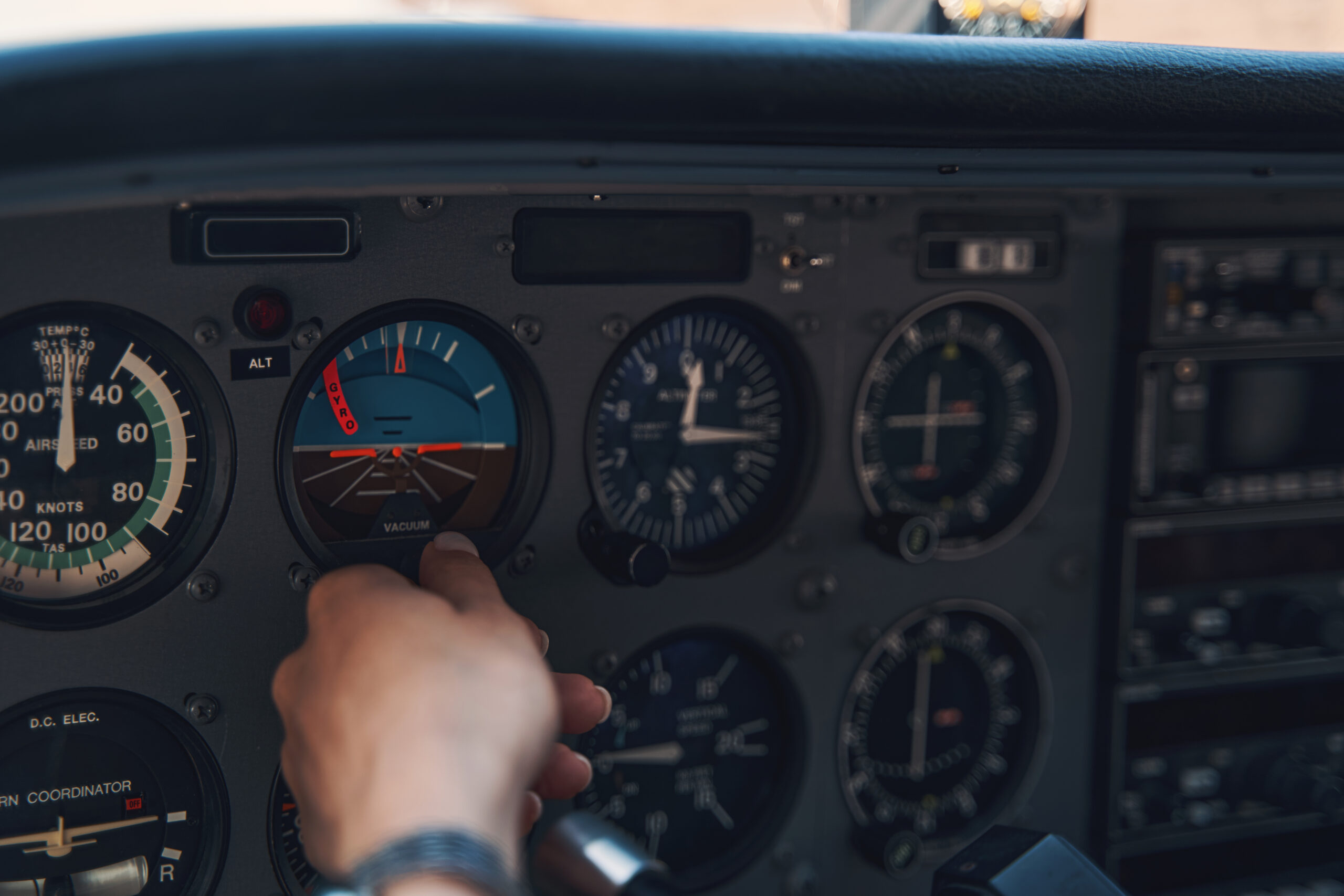
- Aircraft instrument systems
- Gyroscopic and electronic flight instruments
- Instrument failures and troubleshooting
Air Law & Regulations
- FAA instrument flight rules (IFR)
- IFR clearances and procedures
- Controlled airspace operations
Navigation & Flight Planning
- IFR flight planning techniques
- Use of navigation aids (VOR, GPS, RNAV)
- Fuel planning and alternate requirements
Weather Analysis
- Advanced weather theory
- Interpreting METARs, TAFs, and forecasts
- Decision-making in adverse conditions
B. Flight Training
Instrument Flight Procedures
Instrument departures (SIDs), Enroute IFR navigation, Instrument arrivals (STARs).
Instrument Approaches
Precision and non-precision approaches, ILS, RNAV (GPS), and VOR approaches, Missed approach procedures.
Holding & Enroute Operations
Holding patterns, Course intercepts and tracking, IFR communications and ATC coordination.
Emergency & Abnormal Procedures
Partial panel operations, Instrument failures, Decision-making under workload.
Simulator Sessions
Scenario-based IFR training, Weather and system failure simulations, ATC communication practice.
Solo Flights
Dual instruction under IFR conditions, Cross-country instrument flights, Checkride preparation flights.
Program Benefits
- Ability to fly safely in low visibility and weather conditions
- Expanded access to controlled airspace
- Increased confidence and situational awareness
- Essential rating for professional pilot careers
- Strong foundation for commercial and airline training
Assessments
- FAA Instrument Rating written exam
- Ongoing instructor evaluations
- Practical flight proficiency checks
- Final FAA Instrument Checkride preparation
Entry Requirements
- Hold a valid Private Pilot License
- Valid FAA medical certificate
- English language proficiency
- Completion of required flight and ground training

Your Pilot Career Start Here
Take Off With Miami Flight School
Begin your flight training today and join a global network of skilled pilots shaping the future of aviation together.